Wildflowers, birds and why Dod Mill’s meadow matters
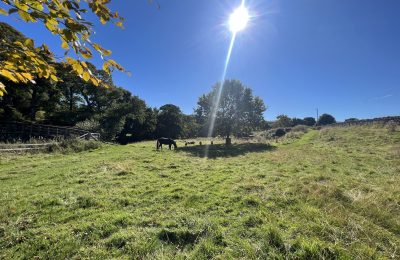
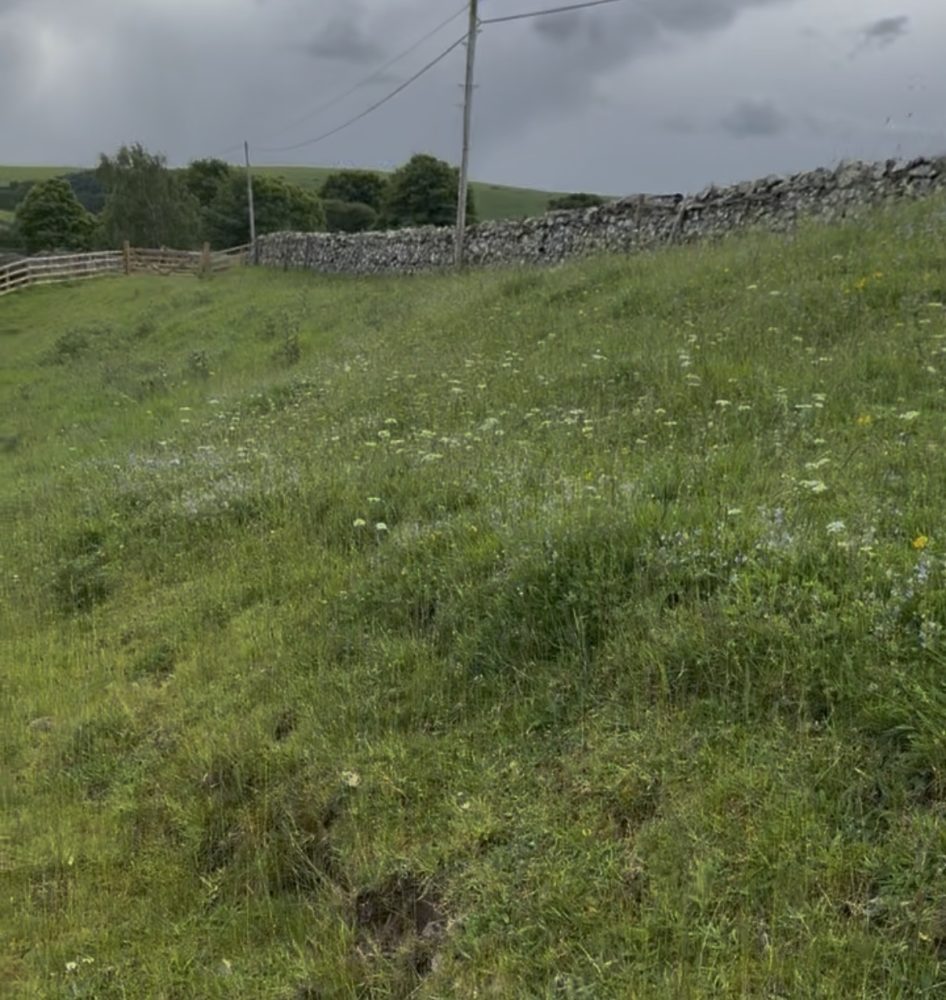
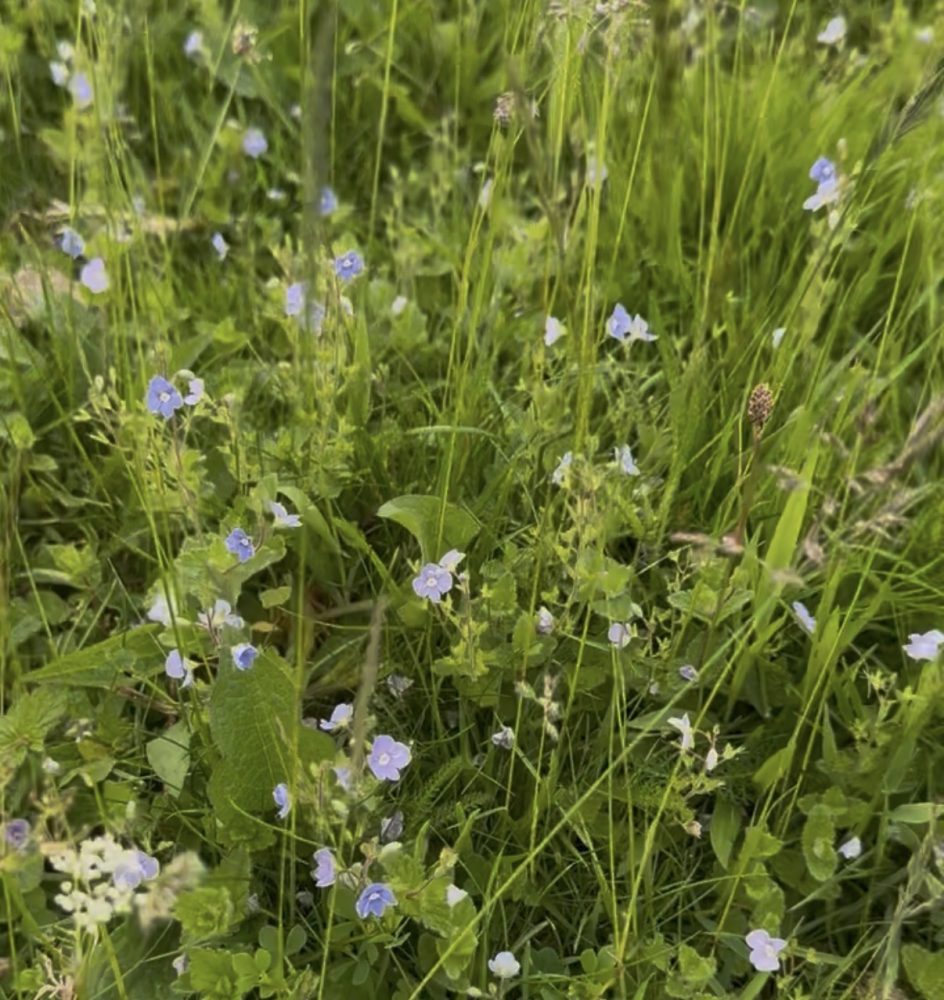
15 Jun 2026On a warm day in July, the meadow at Dod Mill looks like something from a hundred years ago. The grasses are tall and slightly unruly, speckled with white, yellow and purple wildflowers, including the pale lilac of harebells. Bees work steadily through the knapweed. A skylark is singing somewhere above, just out of sight.
We have come to understand that what is growing here is genuinely rare. The meadow has been assessed as MG5 neutral grassland, a habitat type that has declined by over 95% across the UK since the middle of the last century. Fertilisers, reseeding and intensification have quietly removed it from most of the countryside. What remains tends to survive on the margins: steep slopes too awkward to plough, corners that have been left alone long enough.
We have not done anything heroic to create this. We, and those who have lived here before us, have done nothing, which is rather the point. The ponies and sheep graze it in rotation, kept out of the meadow until late in the season, and we have never added fertiliser. That way of managing the land, practised over time, is what allows the diversity to persist.
What the wildflowers tell you
The species growing in the meadow are not just pretty. Each one is, in its way, a piece of evidence about the history of the land.
Lady’s bedstraw, with its honey-scented froth of yellow flowers, is what ecologists call an axiophyte: a “worthy plant” whose presence indicates a long, undisturbed history of traditional management. You do not find it in fields that have been ploughed or reseeded in living memory. Bitter vetch, with its small pinkish-purple flowers, tells a similar story. These are plants that take decades to establish, and disappear quickly once the land is disturbed.
Harebell is another. The delicate blue-purple bells are easily overlooked but deeply significant: they are an indicator of unimproved grassland, and their presence alongside the others confirms what the ecological assessment formally concluded. This is genuinely ancient grassland, in the sense that it has been managed sympathetically for a very long time.
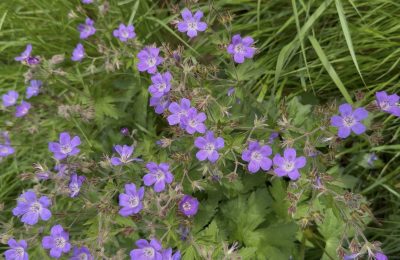
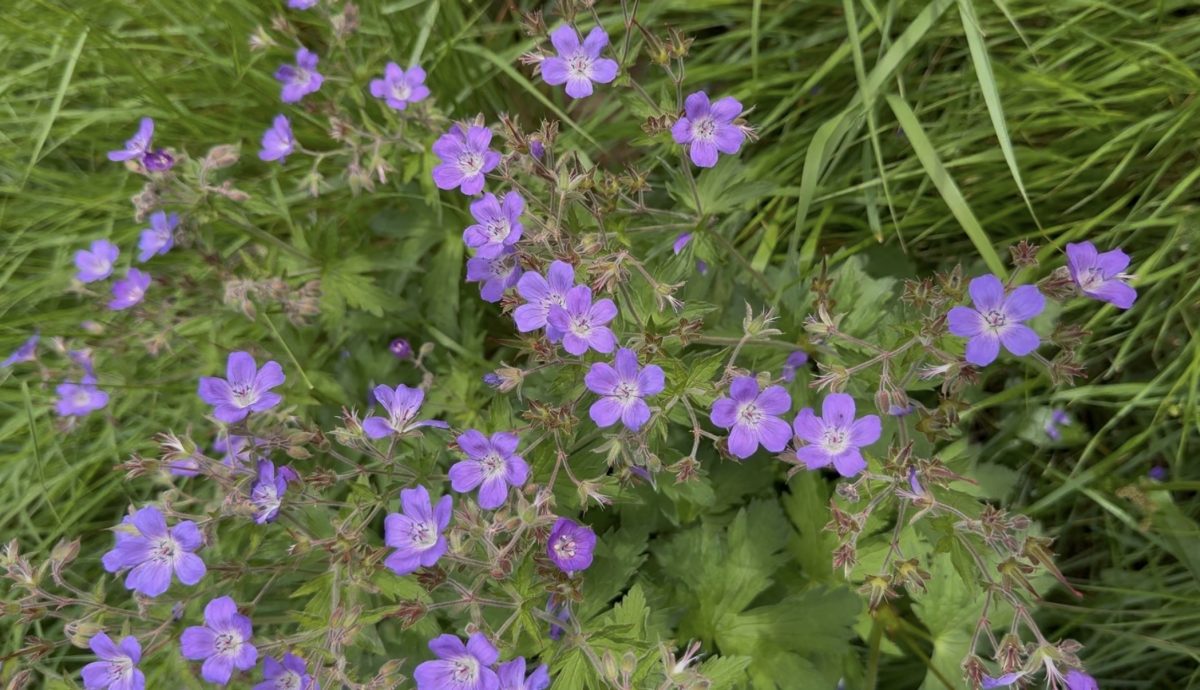
We are also delighted to see wood cranesbill, its violet-blue flowers appearing in recent weeks (June) at in our fenced-off riparian edge and along the riverbank. This is a plant of northern and upland Britain, and more characteristic of the Scottish Borders than of most of England. It’s another indicator species in descriptions of the rare hay meadows. It also has one of the better bits of wildflower folklore: its flowers were used in ancient Europe to make a blue-grey dye for war cloaks, in the belief that it would protect soldiers in battle. It was known as Odin’s Grace.
The flowers and their butterflies
This is where things get interesting. Several of the wildflowers here are not just pleasant to look at: they are the sole food source for the caterpillars of specific butterfly species, and without them those butterflies cannot survive.
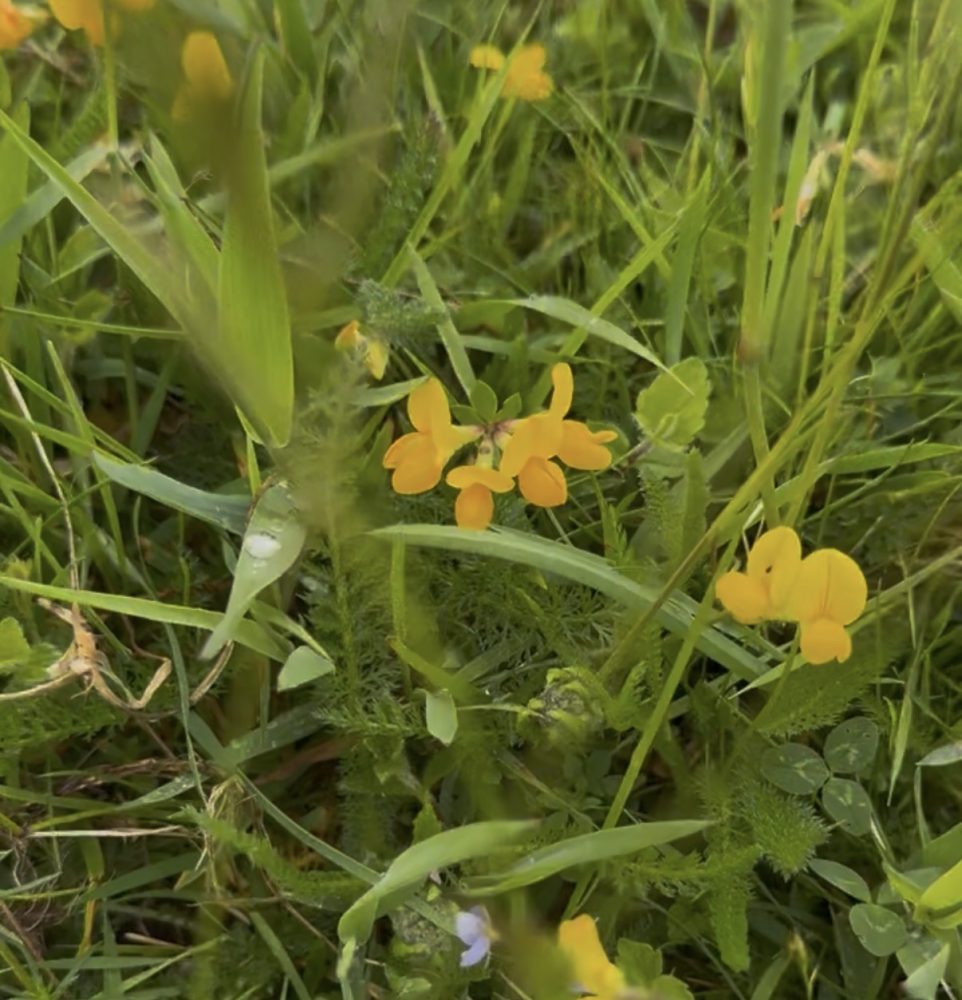
Bird’s-foot trefoil, known variously as “eggs and bacon” for the red-tinged yellow of its buds, is the larval food plant of the common blue butterfly, the green hairstreak and the dingy skipper. Common blue caterpillars feed almost exclusively on its leaves. The plant also supports over 130 herbivorous insect species and the day-flying six-spot burnet moth, whose scarlet-spotted wings make it one of the more striking insects of the summer meadow.
Sheep’s sorrel, which we also have on the site, is critical for the small copper butterfly, one of the most territorial and characterful of British butterflies. The male will chase anything that enters his patch. His caterpillars, though, depend entirely on sorrel leaves to survive.
And then there is wild thyme, growing in the drier, rocky (more alkaline) spots on the slopes of the site. Thyme indicates calcareous soil conditions, and calcareous soil is where rock rose grows, and rock rose is the sole food plant of the northern brown argus butterfly. This is a species of real conservation concern in the Scottish Borders (it’s at threat of extinction), and the conditions on this site suggest that one day, with careful management, we might be able to encourage it here. That is a long-term aspiration rather than a certainty, but it is grounded in something real.
The river and its birds
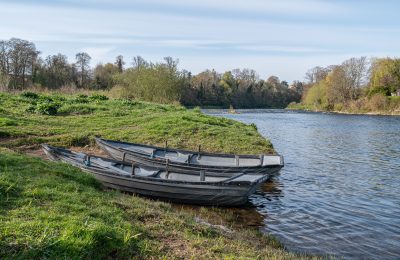
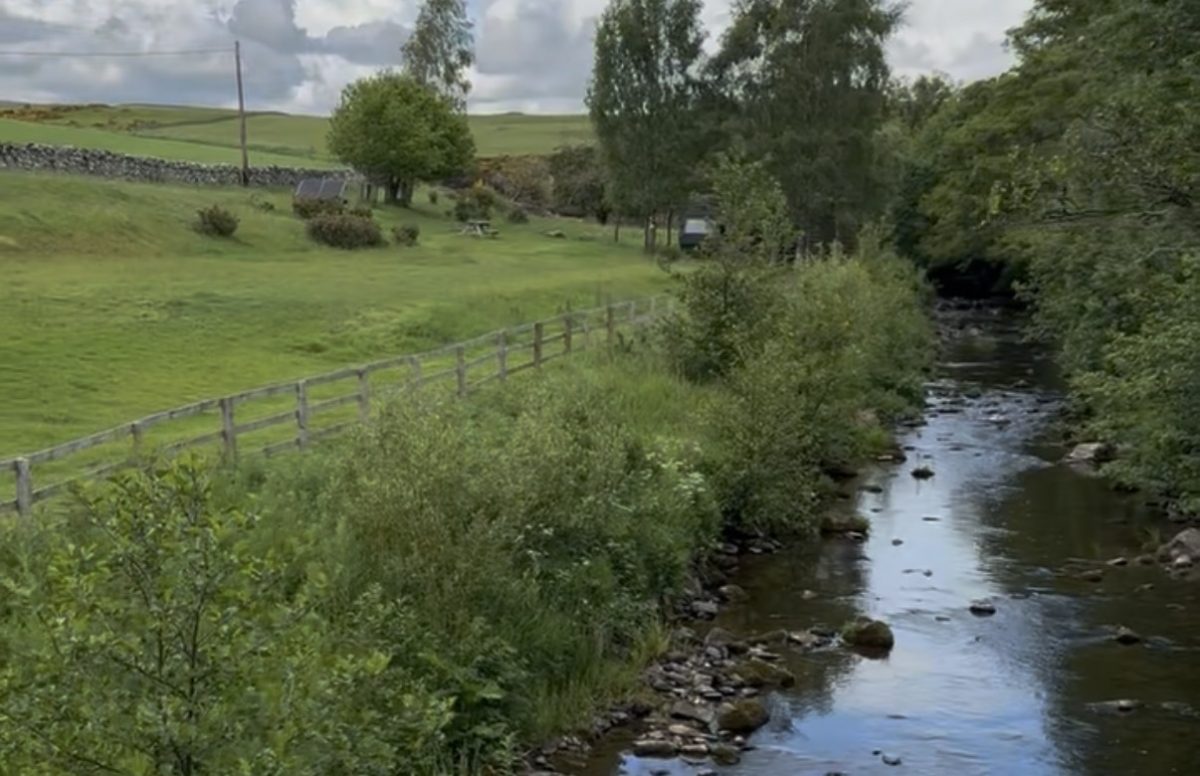
The Boondreigh Water runs along the southern edge of the site, fast and pebbly and, by all accounts, clean. The clearest evidence for that last point is a small brown bird that we see every day: the dipper.
The dipper is extraordinary. It is the only songbird in the world that walks underwater, using its wings to balance against the current as it picks invertebrates from the riverbed. Amazingly, it can stay submerged for up to 30 seconds. It is also amber-listed in the UK, with a population that has fallen by around 40% since 1995, largely because of water pollution reducing the aquatic insects it depends on. A breeding dipper is about as direct a statement about water quality as you can get: they will not tolerate a polluted river. We see them on the Boondreigh every day of the year.
The goosander, which the Merlin app records as common merganser, is another river bird worth noting. The male is a striking creature: dark green head, white body, serrated bill adapted for gripping fish. Its presence here is again a statement about the river: goosanders need good fish stocks, which in turn depend on good water quality and an undisturbed riverbed.
Red-listed birds on five acres
We have been recording birds on the site using the Merlin Bird ID app, and the list has grown to over 25 species so far. We’ll keep listening for more! What stands out is how many of them are in trouble.
The spotted flycatcher is red-listed, meaning it is of the highest conservation concern in the UK. It arrives from sub-Saharan Africa each spring and spends the summer hunting insects from a perch in the woodland edge, making short aerial sallies and returning to the same branch. Its numbers have fallen by over 80% since the 1960s, driven by losses of insects on both its wintering grounds and here. We have a breeding pair.
The yellowhammer is also red-listed, a farmland bird whose population has collapsed with the intensification of agriculture. We first knew of this little bird when some guests, who knew their birds, told us with amazement that they had seen several pairs. The male’s bright yellow head and rattling song, traditionally described as “a little bit of bread and no cheeeese”, is heard less and less across the British countryside. The gorse scrub on the site provides exactly the nesting cover it needs.
The skylark, whose song is the soundtrack to the upper fields, is red-listed too. Skylarks need unimproved grassland with a varied sward height and minimal disturbance during the nesting season. The way we, and our neighbouring farmers, manage the land gives them that.
House sparrow rounds out the red-listed quartet. Less surprising, perhaps, than the others, but a genuine reminder that even familiar birds are not doing well. We have a small colony in and around the buildings.
Others worth mentioning
The barn swallow is amber-listed, its long migration from southern Africa making it vulnerable at both ends of the journey. We get a good number each summer. The dunnock, quiet and underrated, is also amber-listed, and the willow warbler, whose descending song is one of the first signs of spring, likewise.
The great spotted woodpecker confirms the presence of our mature woodland with dead wood and cavity sites. The goldfinch, the oystercatcher picking along the river margins, the moorhen on the mill pond: none of these are in trouble, but each one adds to a picture of a site that supports a genuine range of habitats in a small space.
What it means, and what comes next
None of this happened by accident, but it has not required dramatic intervention either. The diversity here is the result of not doing things: not fertilising, not reseeding, not draining, not grazing the meadow in summer. It is also the result of the river being clean, which reflects the land management of the whole catchment, not just our five acres.
We carried out a biodiversity assessment in September 2025, and it confirmed what we had observed. Seven distinct habitat types, four red-listed bird species, breeding otters and dippers, and an assemblage of wildflowers that points to a long, undisturbed history. The report suggests that Dod Mill is a site of high conservation value, and we’ll continue our approach of gentle enhancement rather than dramatic change.
That feels right. Our job is to keep managing this land carefully, to improve what we can, and to track whether things are getting better or worse. We are working on a composting system, planning to introduce more wildflowers to the meadow, and hoping to commission a professional ecological survey in the next couple of years that will give us a robust baseline to measure against.
If you are staying at Dod Mill and want to know more about what you are looking at, ask us. We are happy to point you towards where the dippers nest, which corner of the meadow to look for harebells, or why the bird’s-foot trefoil matters more than its cheerful yellow flowers might suggest.
This post is part of our wider sustainability work at Dod Mill. You can read about our carbon footprint and net zero commitment in our first carbon footprint blog post and download our full Sustainability Action Plan.